EXPRESS Singing Blog · Podcast
Is Opera Dying? Diversity, Community and the Future of Opera
Andrew Adridge is a Toronto-based arts leader and opera-trained baritone, the co-founder and General Director of Opera InReach and the Managing Director of Volcano Theatre. He holds a Bachelor of Music in Voice Performance and a Master of Music in Opera from the University of Toronto, and CBC Music named him one of its Hot 30 Under 30 classical musicians in 2023. On Season 1, Episode 2 of the Singers Tension Podcast, he sat down with EXPRESS Voice Studio founder Jordanne Erichsen to talk about mentorship, diversity and what opera in Canada needs to become. EXPRESS is a voice and music studio where working artists teach private singing lessons in Toronto, singing lessons in Montreal and singing lessons in Vancouver, in person and online.
The short answer: no, opera isn’t dying, but it has to change. Arts programs are losing funding, yet Andrew finds that students still love opera once they hear it and can see themselves in it. Its future depends on outreach and mentorship for young people, companies that look like the communities they serve, and formats that make new audiences feel welcome. You can read this guide, or press play and listen.

Curious about classical singing, or preparing for a music school audition? Book a lesson with an EXPRESS coach, in person or online.
How This Article Was Written
This article was conceptualized with the help of AI and built from the transcript of Singers Tension Podcast Season 1, Episode 2, recorded in 2020. It is written and reviewed by the EXPRESS team. Quotes are lightly edited for readability, and the full transcript is at the bottom of this page.
Table of Contents
- Is Opera Dying? Why Opera Still Has a Future
- What Is Opera InReach? A Mentorship Program for Young Singers
- How to Get Into Opera as a Young Singer (and Choose a Voice Teacher)
- Why Diversity and Representation in Opera Matter
- How Opera Can Attract New Audiences
- Opera Careers Beyond Performing: Teaching, Arts Admin and More
- Advice for Young Opera Singers: Your Career Is a Marathon
- Listen to the Full Episode
- Frequently Asked Questions
- Full Episode Transcript
Article Takeaways
Opera isn’t dying, but it has to change. Students still love it when they hear it and can see themselves represented in it.
When you choose a music school, look at the voice teachers, not just the school’s name, and book a trial lesson.
A singer is more than a performer. Teaching, arts administration and other work can make you a better artist, not a lesser one.
Is Opera Dying? Why Opera Still Has a Future
No. Andrew sees real problems, but a lack of interest isn’t one of them. “Across Canada, we’re seeing so many arts programs getting defunded, a lot of money being sourced elsewhere, a lot of these programs closing, teachers leaving,” he says. That doesn’t take away the desire students have for classical music. When he and his colleagues sing in schools, “every time you sing for them, they’re always interested,” even if the first reaction is a goofy one.
The bigger threat is whether young people believe they belong. “If you don’t have the vision that you can belong in this industry or that it’s something that can happen for you, then it will go away,” Andrew says. The pandemic added a second pressure: with opera houses cancelling whole seasons, both Andrew and Jordanne argue that opera has to be about more than “the bricks and mortar” of any opera house. Signs that opera still has a future:
- Students respond with curiosity when singers visit their schools
- Teachers say their music, drama and even science classes want to explore opera
- Smaller companies are reaching new audiences with shorter, more relevant shows
- Organizations like Opera InReach are filling the gaps that funding cuts leave behind
What Is Opera InReach? A Mentorship Program for Young Singers
Opera InReach is a collective that Andrew co-founded with Daevyd Pepper in 2020. In Andrew’s words, it is “dedicated to examining the civic impact of opera in a modern world.” It runs digital initiatives for students, offers an outreach space for companies that can’t do outreach on their own, and searches for “a new Canadian identity for opera, one that’s more based in equity, diversity, inclusion, accessibility and justice,” with a focus on amplifying BIPOC and LGBTQ2SIA+ voices.
A mentorship program for students
At the time of the recording, Opera InReach had mentors in four provinces and was in talks about expanding out east, into Quebec and Saskatchewan, and eventually to the territories. After a school visit (virtual during COVID), students can join a digital mentorship program of seven one-hour sessions, in a beginner or an intermediate stream. A grade 12 student might want help applying to music schools; another student might just want a “greatest hits” list of great Toscas. “It’s really going to be tailored toward an individual basis,” Andrew says. The mentors aren’t only singers: there are pianists, directors and stage managers too. What students can get from the program:
- Seven one-hour sessions with a working opera professional
- A beginner or intermediate stream
- Help with music school applications and auditions
- Mentors in singing, piano, directing, stage management and design
- A YouTube series of short videos and opera facts for students who don’t join the mentorship

How to Get Into Opera as a Young Singer (and Choose a Voice Teacher)
Jordanne remembers applying to university the same way her friends applied to psychology or health programs: send in your grades, do an audition, and hope you get into a school with a good name. She only auditioned at one school. A mentor who had been through it, she says, would have told her: “Don’t look at the school, look at the voice teacher and the people on faculty, and do a trial lesson with them and see if you connect.”
Mentors who teach from experience
Andrew says that’s exactly the gap Opera InReach is trying to fill. Mentors don’t need to be licensed voice teachers. They teach “from a teaching artist kind of perspective,” using their own experience to guide students, because “we know the value in being able to relate to someone and talk to someone about your experiences.” Opera also needs more than singers, so a student who loves set design can be matched with someone who has worked in that field. If you’re an adult who simply loves the sound, our guide to opera vocal coaching for hobbyists is a good place to start. Steps for young singers who want to get into opera:
- Listen widely and go to live performances, big and small
- Find a voice teacher you connect with, and take lessons before you audition
- Book trial lessons with faculty at the schools you’re considering
- Talk to singers, pianists and directors who have been through the training
- Remember that design, directing and stage management are opera careers too
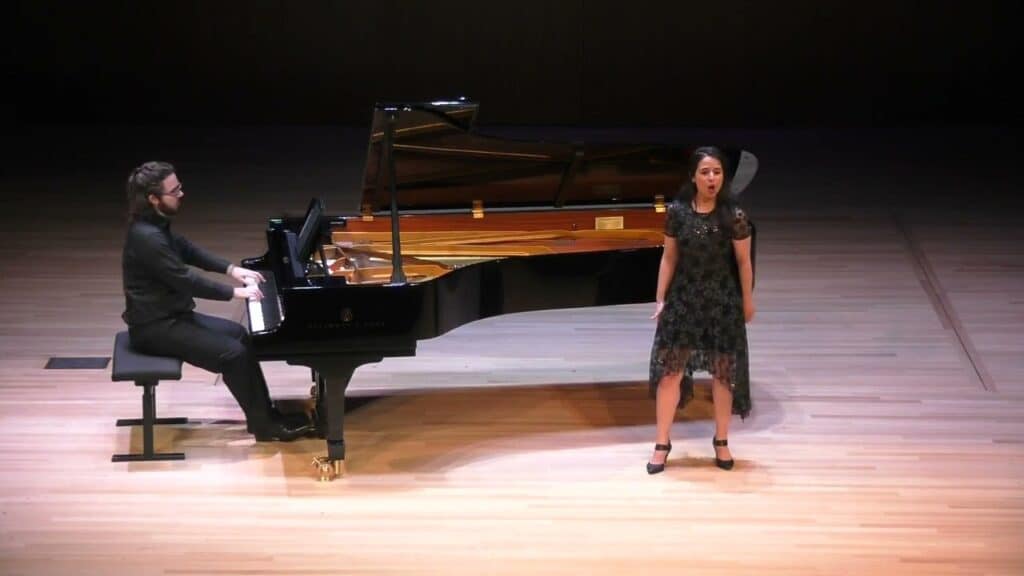
For a taste of what a career in classical voice can look like, check out mezzo-soprano and EXPRESS voice teacher Justine Ledoux performing Berlioz’s Le spectre de la rose below!
See Justine Ledoux’s performance on Instagram
Why Diversity and Representation in Opera Matter
“Art needs to belong to the communities. It needs to belong to the societies that they’re in,” Andrew says. If a society looks a certain way, demographically, by race, gender and sexuality, then its opera companies need to make an effort to look like that too, “so that people can feel like it belongs to them.” Many people see opera as “this Eurocentric, elitist thing that doesn’t belong to the common person,” he says. “That’s not what it is.”
Opera has always been about its time
Andrew points out that opera has always spoken to its society: “In Mozart’s times it was about promoting the common cause, and in Verdi’s times it was about promoting revolution.” Jordanne imagines how powerful it would be to see more lesbian and gay couples’ romances on the opera stage, and Andrew agrees that opera’s storytelling “transcends any kind of barrier.” What he wants to see more of in Canadian opera:
- Immigrant stories
- LGBTQ2SIA+ love stories
- BIPOC representation on stage and across the whole industry, from the people taking tickets to the heads of companies
- Companies that reflect Canada’s multiculturalism

How Opera Can Attract New Audiences
Andrew sees a rift in Canadian opera between a very traditional view of the art form and a newer, indie one. Both are valuable, but “Canada is too small for the opera landscape to look like eight different things.” He wants people who go to the Canadian Opera Company to also see shows at Tapestry, Against the Grain, FAWN and Loose TEA, and he wants first-time listeners who discover opera at a smaller company, in English or with a current story, to feel they could go to the COC next.
Shorter, more social opera
Jordanne notes that today’s audiences are used to everything being instant, and that people often tell her a 45-minute recital was “the perfect length.” She would love to see more new operas written as short stories of 45 minutes to an hour, like Against the Grain’s opera pubs, where you have a drink in your hand and meet the artists. Andrew agrees: “You want people to feel comfortable in their own skin when they go into the opera.” Ways opera companies can lower the barriers:
- Shorter works of around 45 minutes to an hour
- Casual venues where you can have a drink and meet the artists
- Operas sung in English or with current subject matter
- Less “pomp and circumstance,” so newcomers don’t feel they have to transform to walk in the door
Opera Careers Beyond Performing: Teaching, Arts Admin and More
Why would a trained baritone put so much energy into building an organization? Andrew says his dream has never been singing alone: “It’s always been in making the sector, the world, the opera community better with my voice.” He doesn’t see his arts administration work as a sidestep but as “a realignment of that momentum in another facet.”
The one percent
“How many people in reality are sustaining themselves as being opera singers? The answer is probably one percent,” Andrew says. Everything else he has done, from catering and restaurant work to leadership roles, has made him a better artist, and he wants employers outside music to see singers’ transferable skills too. Jordanne remembers the founder of Opera NUOVA telling a room of young singers that if there was anything else they could be happy doing, they should do it, and every singer in the room deciding they would be the exception. Her advice now: “You have to be brave enough to reinvent yourself as many times as necessary in your life.” That’s a theme in our guide on how to become an opera singer with Lyndsay Promane, and it’s why EXPRESS was built around artists who teach, as you can read on our About page. Points to remember if you feel guilty for doing more than sing:
- You don’t owe anyone a performing career, even if you won scholarships
- Doing something else isn’t quitting
- Other work builds drive, leadership and transferable skills
- Taking a break can give you back your love of singing
To hear Andrew in action, check out his performance of the Count’s aria from Mozart’s Le nozze di Figaro below!
Advice for Young Opera Singers: Your Career Is a Marathon
The best advice Andrew ever received came from Wendy Nielsen: “It’s a marathon, not a race.” He had a larger voice coming out of school and wasn’t ready for young artist programs. He didn’t get into any programs, and the one school that accepted him he couldn’t afford. “I remember crying on my bathroom floor,” he says. His mom told him to “maybe take the time now to just be a person,” and it turned out to be exactly what he needed.
Be curious, and be kind to yourself
If Andrew could talk to his 17-year-old self, he would tell him to “just lay off yourself,” because “things are going to be fine on the other side.” Jordanne would add curiosity: be curious about your instrument, and bring the same curiosity to your life outside singing, because “not until you know yourself can you bring that to any role you play.” Andrew now practises with a freer, more meditative mindset and won’t let the “demons in the back of my head” tell him his voice isn’t good enough today. For more on building that mindset, read our guide on how to practice singing, even on bad days. Habits that keep a singing life sustainable:
- Measure your progress over years, not audition seasons
- Take time to be a person outside of singing
- Treat setbacks as part of the journey
- Practise with curiosity instead of judgment
To see how EXPRESS artists balance teaching and performing, check out the video below!
Listen to the Full Episode
This guide is based on Season 1, Episode 2 of the Singers Tension Podcast, “Diversity, Community, and Mentors in Canadian Opera,” released in November 2020. Prefer to listen? The full 40-minute conversation is below.
About Andrew Adridge
Andrew Adridge is a Toronto-based creative industries professional, arts leader and producer working across theatre, opera, music and cultural development. He is the Managing Director of Volcano Theatre and the co-founder and General Director of Opera InReach. Originally trained as an opera singer, he holds a Bachelor of Music in Voice Performance and a Master of Music in Opera from the University of Toronto, has performed at Toronto’s Four Seasons Centre for the Performing Arts and the Kennedy Center in Washington, D.C., and trained with the Chautauqua Institution and the Banff Centre. He was named a CBC Hot 30 Under 30 classical artist and was one of two Canadians selected for the 2025 OPERA America Leadership Intensive. He has also written for Opera Canada and Ludwig Van Toronto.
About the host
Jordanne Erichsen is a soprano, vocal coach and Alexander Technique practitioner, and the founder of EXPRESS Voice Studio. She hosts the Singers Tension Podcast, where working singers talk about technique, the body, performance and the music industry. More episode guides: how to practice singing (even on bad days) with Susan Elizabeth Brown, how to become a vocal coach with Jessica Kos-Whicher, and how to become an opera singer with Lyndsay Promane.
EXPRESS coaches like Jordanne teach private singing lessons in person in Montreal, Toronto, Vancouver, Ottawa and Mississauga, and through online singing lessons anywhere in Canada. Whether you’re a teen preparing for a music school audition or an adult discovering classical singing, a coach can help you build healthy technique and find your own path.
Ready to explore your voice? Find your EXPRESS teacher, in Montreal, Toronto, Vancouver or online.
Frequently Asked Questions
Is opera dying?
No, opera isn’t dying, but it has to change. Arts programs in schools are losing funding, yet students still respond to opera when they hear it live. Its future depends on outreach, mentorship and companies that reflect the communities they serve.
What is Opera InReach?
Opera InReach is a Canadian collective co-founded in 2020 by Andrew Adridge and Daevyd Pepper. It examines the civic impact of opera, runs digital initiatives and a mentorship program for students, and works toward more equity, diversity and inclusion in opera.
How can a high school student get into opera?
A high school student can get into opera by taking voice lessons, going to live performances and talking to people who have trained in the field. Before choosing a music school, look at the voice teachers on faculty and book a trial lesson to see if you connect.
Why does diversity matter in opera?
Diversity matters in opera because art needs to belong to the communities it serves. When the stories, singers and staff reflect a society’s cultures, genders and sexualities, more people can feel that opera belongs to them.
How can opera attract new audiences?
Opera can attract new audiences with shorter works of 45 minutes to an hour, casual venues where people can meet the artists, operas in English or with current stories, and less formality, so newcomers feel comfortable walking in.
Can you be an opera singer and have another career?
Yes, you can be an opera singer and have another career. Very few singers live from opera alone, and teaching, arts administration and other work build transferable skills that can make you a better artist.
Full Episode Transcript
This transcript of “Diversity, Community, and Mentors in Canadian Opera” with Andrew Adridge has been lightly edited for readability.
Read the full transcript
What is Opera InReach? (00:00)
Jordanne: This is the Singers Tension Podcast, the podcast by singers, for singers. Welcome to the Singers Tension Podcast. My name is Jordanne Erichsen and I’m here today with Andrew Adridge, a baritone, arts advocate, and also one of the co-founders of Opera InReach. This is essentially a platform that acts as the middleman between interested young people, such as high school students, and mentors across Canada who are opera singers, piano players, stagecraft designers, anyone involved in the opera community. And on the other end, anyone interested can reach out to Opera InReach for help with equity and media resources. So, Andrew, tell me more. What is Opera InReach? Why is it important to Canada?
Andrew: Yeah, so Opera InReach is a collective dedicated to examining the civic impact of opera in a modern world. We do this through digital initiatives aimed at engaging students, providing an outreach space for companies who can’t otherwise do outreach, and searching for a new Canadian identity for opera, one that’s more based in equity, diversity, inclusion, accessibility and justice, and amplifying voices that are historically oppressed in the industry, particularly those of BIPOC nature and our LGBTQ2SIA+ communities.
Jordanne: It seems like, from what I’ve seen of it, you have all of these mentors now as well. Are they just in Ontario, Alberta and Manitoba so far, in three provinces?
Andrew: So we also have Alberta and Manitoba and BC. So we have four provinces so far. We’re in discussion, slowly, to understand what it could look like out east, along with in Quebec and Saskatchewan, and even further, we can move to the territories as well, hopefully in some capacity.
Jordanne: Take over the Yukon.
Andrew: Yeah, exactly. It’s about getting as much reach as possible, and we know that that means as many Canadians as possible. If we can get the most out of our geographical space and allow for people from BC all the way to Newfoundland and everywhere in between, that’s our goal, definitely.
Jordanne: Are you acting as a midway body to get people who are young, like high school age, interested in opera and integrated into the opera culture, as well as the other way around, with people who want to put on an opera but don’t have the resources to do it? Is that where you fit in the middle, if I understand?
Andrew: Yeah, I think our initial vision was more about the outreach with high school and middle school students, but as we’ve grown, we understood that our role is really one that fills a lot of voids in the industry that present themselves right now. For example, we’re now partnered with several opera companies to have them provide resources to the students that will be a part of our digital mentorship program, but also to partner with them in a way that we can respond to the need for more equity in the industry, whether that means that we provide them with consultations, or they give us resources that they’re doing with equity as well. And we also now partnered with the University of Toronto, and we’re looking for more university partnerships, where we’re offering a course in community engagement and equity in a modern world as an artist, in a really neat sense of artistry. So we’re really doing the work that I think Daevyd, my co-founder, and I both saw didn’t exist as much. We went to music universities, we were at different schools, different institutions, and we didn’t see the vital aspect of community engagement being taught at a university level or being valued. So that’s when we decided, let’s tackle that. And we know that outreach is usually done by larger companies who have the resources to do so or have young artists. So we said, well, we know that there are going to be community companies that want to do the outreach. What can we do? Let’s provide that basis for them. So we’re really looking at different aspects of the industry, all based in this greater outlook, this greater desire for equity and more sustainability into the future of our industry, and saying: what can we do there, how can we tackle this, what can our reach be there?
Jordanne: Yeah. When I think of smaller opera groups or organizations, I think of Against the Grain, or there’s another one in Toronto where they travel around Canada on bikes. I think Against the Grain is more on the bigger end of small organizations now, because they have more of a persona in the public and they’re more well known to the COC and things like this. So when I look at that, I think, as a young artist, how do we create, number one, a brand for ourselves? We get told that a lot. But then also an interest in the community, so there’s awareness. It’s one thing to go on Instagram and Facebook and post about the show you’re doing. Of course, that’s essential work, but in our generation, anyway, there’s a lot of “oh, that looks interesting, maybe I’ll go to it,” and then you never do. So how do you step it up to another level, where we really are engaging people and getting them interested in opera? And you feel quite powerless as an emerging artist coming right out of university, especially in opera, because most likely you’re in a place where you’re like, “My career is not taking off, I’m still learning, so do I really have a voice to speak out, and should I be promoting myself? I’m a small fry.” These are the things that go through our heads. So I love that you and Daevyd were like, there’s a problem here with actually having a voice in the public and having community engagement, and how do we fill that.
Bringing opera into high schools (06:00)
Jordanne: It’s bizarre for me how I came into opera. I fell asleep with CBC Radio playing every night under my pillow. And then my voice teacher told me I wasn’t going to do musical theatre because my voice was too big. So it was chosen for me, right? But I wonder, for people who don’t have this weird introduction to classical music in high school, are there still high school students at the same level or quantity as when we were in high school who are interested in it? Have you noticed anything with your interaction with high schools? What is the attitude there? Do people know or like opera?
Andrew: Well, I think that there is still a love for it. My partner teaches at an arts school right now, and I can tell when she teaches her students that there’s a genuine love for classical music when you have the exposure to it and when you can see yourself, I think, equitably represented in it. The problem right now is that across the board, across Canada, we’re seeing so many arts programs getting defunded, a lot of money being sourced elsewhere, a lot of these programs closing, teachers leaving. And that’s really sad. I think that it doesn’t, though, take away the desire or the interest that students have in classical music. That’s where we saw our role as an organization. We said, okay, let’s fill the void that’s being taken away. Let’s really get students interested in it, because we all went to those schools. We were all high school students at one point in time and realized that we did love it, right? So I don’t think that goes away. But if you don’t have the resources, if you don’t have the vision that you can belong in this industry or that it’s something that can happen for you, then it will go away. So we really wanted to ensure that we could provide that service if that service was being depleted. From what I understand from my interaction so far with the high school communities, especially with teachers, all of them have been saying that their students would love to do this: “This is something I’m sure so many of my music classes, or my science classes,” because we have sessions that are tailored towards science, “or my drama classes would be interested in exploring more about opera.”
Jordanne: That’s cool.
Andrew: I’ve gone to some schools and done some singing work with a few colleagues of mine, and every time you sing for them, they’re always interested. There’s never an “oh, that’s stupid.” It’s always, “I want to explore more. Tell me more. Show me more of this.” Even if it’s in a goofy way initially, you can tell that there’s interest. So I think we’re banking on the interest that’s already there, but we’re providing them with the foundation to actually see practical implementations of that interest, to understand what that interest means and whether it can develop into something greater for them.
Jordanne: So you go into the school and do a performance, and create an awareness of, “Hey, this is opera.” And if I’m a student in high school and I’m like, “Oh yeah, I like that classical vibe,” then what else does Opera InReach offer? What is the role of those mentors for those students?
Andrew: Exactly, yeah. So we will go into the school, right now virtually because of COVID, and we want to make sure that we’re operating within those parameters. Then students have the option to join our digital mentorship program, which is where our mentors are going to thrive. That will give students seven one-hour sessions in two different streams, either a beginner stream or an intermediate stream, where they and the mentor can figure out some keys to operatic success in whatever capacity they want. Whether that means, “I am a grade 12 student, I’m interested in applying to schools next year, can you walk me through the process, can you help me out with some resources?” The mentors are there. That could go all the way to, “I don’t know anything about opera, but I might be interested in it. Can we make a greatest hits album of some sopranos, or all the greatest Toscas you’ve ever heard, or some opera that I might be interested in hearing?” The mentors are there for that too. It’s really going to be tailored toward an individual basis, and we were really excited to be able to do that for students, because when it comes to an introduction to opera, it’s important to be able to give them something they can relate with, rather than something juxtaposing or imposing what we think the career should look like or what we think music education or a vocal lesson should look like. I want to be able to collaborate with them in an equal partnership, with them and the mentor, and develop something together. For students who don’t want to take advantage of that, we’re going to have a whole YouTube series of little videos and clips and interesting facts about opera that we’re developing now. Daevyd Pepper, my co-founder, is really spearheading that initiative. We want to provide some extra content for the students we interact with who say, “Maybe I don’t want to do the mentorship program, but I am interested in opera. What else can I do here?” That’s what that is going to be. We want to make sure we’re not just coming in and giving a limited interaction with the students, but providing something that truly is sustainable and that they can see a pathway to development in.
Mentors, auditions and choosing a teacher (11:00)
Jordanne: What I love so much is this relationship with mentors. Are they all singers, or are some of them pianists?
Andrew: Some are pianists, some are directors, we have stage managers. We’re trying to make sure that we have a good pool of opera sector workers.
Jordanne: Right. So before I dive into this thought: if I’m a high school student but I’m actually interested in set design, I could also connect with your program and maybe get some hands-on experience or mentorship from someone who’s done that route as well?
Andrew: Definitely.
Jordanne: Oh, I love it. Okay. So my other thought was that when I was graduating from high school, you’re in the mentality of everyone else who’s applying for psychology or health or whatever, where it’s just, “Oh, I send in my grades, and then, I guess I’m singing, so I need to do an audition. And I know that U of T is a good school, or Vancouver is good, so I just hope I get in there.” But if you had the opportunity to talk to someone who’s been through university, they would probably say, “Don’t look at the school. Look at the voice teacher and the people on faculty, and do a trial lesson with them and see if you connect,” because your voice and the way they explain things really need to coincide. That was advice that was never given to me. I only auditioned at one school, and I really wish that someone had said, “Maybe you should try a lesson with a few of these teachers and see.”
Andrew: Yeah, and that’s, I think, the gap that’s missing right now. If you’re with a voice teacher, you have that experience, but they’re from previous generations. Maybe things have changed, maybe the times have changed, maybe there’s a different environment or culture around singing in a university or going to a school or continuing your education. We want our mentors to really be teaching from a teaching artist kind of perspective, where their experience is forming their teaching decisions. You don’t have to have all the pedagogical tools. You don’t have to be a licensed or studied voice teacher to be a mentor with us. It’s about being able to provide what you can, because we know the value in being able to relate to someone and talk to someone about your experiences.
Why opera has to be about community (14:00)
Jordanne: It’s like an underworld of classical music, I feel, in Canada, where there are so many young artists who are not on the stage of the COC but have so much to offer artistically and creatively, especially from under-represented people. In Montreal, one of the teachers who works for the Studio [name unclear] is always doing LGBTQ spins. He just did a male version of Carmen, and it was amazing. There are interesting things happening that maybe people wouldn’t know were a possibility for them. They just think, “Okay, I’m going to go to university, then I’m going to try to get on the stage at a big house.” But actually, you can be so much more expansive in your creativity and shape your own role. And I think that is detrimental in the world that we live in today. I look at what’s happening with all of the opera houses cancelling their seasons for another year into the future, and that makes even the artists who are on the big stages put a question mark at the end of the sentence: “I’m not really sure what my career is going to look like next year.” So what does that mean for everyone else? What a great opportunity to ask, “Who do I want to be? How can I make that happen? I’m going to get really inventive.”
Andrew: Yeah, definitely. I agree completely, and you speak to a truth. Right now the world is suffering, and I think we have seen that the industry is not always going to be there for the artists. That’s not necessarily anyone’s fault, but if that is the case, we need to move forward in a way where we understand what our purpose in this music is. How can we connect with people beyond just having to fill a void in an industry? Opera needs to be about the societies and the communities that it’s in. I strongly believe that, and I think this is a vital time for us to reassess that and to do what opera has always done. In Mozart’s times it was about promoting the common cause, and in Verdi’s times it was about promoting revolution. Opera has always had a place in that. And I think we are in a crucial time right now to understand that, so that on the other side of this, we understand opera as something that is not just going to be tied to the bricks and mortar of any opera house. It is something that’s lasting beyond that. So if there’s another pandemic, hopefully not, but if the world comes back to something like this, we are more prepared, and we know that there’s security on the other side of it.
From baritone to arts leader (16:00)
Jordanne: You, as Andrew the baritone, Andrew the singer: what made you decide to take a sidestep from “I want my bread and butter to be me performing” to “I’m going to put a lot of effort into creating this platform now”? Why did you decide to redirect like that?
Andrew: I think my dream has never been in singing specifically. It’s always been in making the sector, the world, the opera community better with my voice, and I never understood that solely as being on the stage. It could also be with writing, and I’ve been doing some of that, and it’s also using whatever influence or power or agency I have to speak out for people or to create these kinds of opportunities. So I don’t see it too much as a sidestep. I see it as maybe a realignment of that momentum in another facet, putting the drive I’ve always had, to make people feel something with my voice, into another kind of venture. Now I’m doing a lot of opera administration work and feeling very comfortable in that category, and that’s why I’m really happy that, along with Opera.ca and other individuals, there’s really a championing of this portfolio understanding of your career now, that people can do other things and feel comfortable with it. I think that’s something you and I probably both internalized as being wrong when we were in school: you do opera and that’s it. But how many people in reality are sustaining themselves as opera singers? The answer is probably one percent.
Jordanne: Because we’re all the one percent, Andrew. We’re all the one percent.
Andrew: It’s just crazy and not real. Again, it’s nobody’s fault that that’s what we’ve been taught, but I think it needs to be said that it’s not the only way for things to happen. Everything that I do in my life informs me more as an artist. I think I become a better artist with the other things that I’m doing, actually. Even when I was catering and working in restaurants, it was informing my understanding, my drive, my determination, my leadership. These are all things you can see as transferable skills, and it works both ways, because on the other side, I think the job markets and sectors outside of music need to understand that opera singers have transferable skills. You can do other things as a singer, so you’re not subjected to one stream of career if you’re not going to be a singer, and the world opens up a little bit. There are tons of transferable skills in every aspect, and all of it can inform you and make you a better person.
Jordanne: I cannot agree more with what you just said. A hard truth that was said to me: I remember the first time I ever did Opera NUOVA, having a powwow in the theatre class, and Kim, the founder of Opera NUOVA, said to everyone, “If there’s anything else in your life you could see yourself being happy doing, you should go do it, because this is a really hard path.” And all of us sat there, wide-eyed: “Yeah, it’s a really hard path, but I’m going to do it. I’m the exception.” That was 100% me, and I would have given everything to be that one percent. And even though people tell you it’s really hard, you get into it and you’re like, “Oh my goodness, the anxiety of not knowing where my next paycheque is coming from. Am I going to be a server until I’m 35?” And then you have to be brave enough, and this is really important: you have to be brave enough to reinvent yourself as many times as necessary in your life. So I look at what you’ve done. You are a singer, and you are no less of a singer or an artist because you created a company. As you said, you are even more informed as a person and confident, and have so many more skills you can transfer to your art. I have many friends who express a feeling of guilt: “Oh, but I got so many scholarships, and people expect me to be a performer.” And I say, you don’t owe them anything. You took that scholarship because you earned it and you were dedicated, and you have the right to reinvent yourself and be whatever feeds your soul.
Andrew: I agree with you completely, and it also doesn’t have to be so absolute. When we’re told that if you stop singing in any capacity or if you do something else, you’re quitting, that mentality needs to be done away with. You can have balance in life, right? You can do a multitude of things and still be every bit the artist you were before. We need to do away with the notion that one means leaving the other. There’s room for a lot of things in life. Think of your successful artists, whatever success means to people as a career. I’m sure they’re not singing every single day of their lives, right? There’s room for other things in life, even if you’re doing well or making a lot of money, if that’s what you see as doing well as an artist. That’s something I really need to take back for myself as well, because I was working a good deal singing-wise before the pandemic, but I found that opera singing was becoming a chore to me. It was no longer joyful, because it was always just about work: “Okay, fine, I need to attach to the next work thing that I’m going to do.” So take back a little bit of that agency for yourself. Take back that love for singing. Realign your purpose a little bit, especially in this time. I think it’s vital.
Jordanne: Yeah, and we could talk about balance forever, because there’s a balance between having goals, which are beautiful and important, and not being in such a rush to achieve them that you lose sight of who you are besides just a singer. I think many of us, if not all of us, are guilty of that, especially during university: every single thing I do throughout my day must relate to me as a singer in some form, or I shouldn’t be doing it. And then you go insane.
Andrew: Yep, exactly.
The future of opera in Canada (23:00)
Jordanne: And that’s why we’re crazy today, but that’s fine. We’re processing the crazy now, and I think that’s the point we need to get at. So when you think of the world of opera, where do you hope to see it? Where do you think it’s going? What does the field of opera in Canada look like?
Andrew: I hope that it turns into more of a community effort and a collaborative effort. I think we’ve been seeing a lot of divisiveness in the opera world, especially in Canada. We see one very traditional view of what opera looks like, and then a very new-age, indie, if you will, view of what opera looks like. I think that’s great, but what it has done is create a bit of a rift in the community. We need to return to the understanding that we’re all working toward one goal, which is producing opera, and that involves the voices thinking about the new wave of what opera could look like and the voices that have been established in tradition, because that brings together the community aspect that is necessary. You have people who are going to see the operas at the COC all the time. That’s great, but you want them to come and see the shows at Tapestry and Against the Grain and FAWN and Loose TEA. And it’s the same thing the other way: you want those people who have never seen an opera, who would probably go to see those smaller companies first because it’s something they may relate to more, because it’s in English or the subject matter is a little more current, to then say, “I can probably go see this at the COC, or in Vancouver, or wherever.” Again, we need to return to the fact that we’re all in this together. Canada is too small for the opera landscape to look like eight different things. That’s not necessarily about repertoire. It doesn’t mean stop doing one type of opera. But it does mean that everybody needs to be working toward a goal together.
Andrew: Further to that, the Canadian opera landscape needs to look more like the societies it’s trying to serve. Art needs to belong to the communities. It needs to belong to the societies that they’re in. And if your society looks a certain way, and I mean demographically, based on race and gender and sexuality, you need to make an effort in your community and your company to make opera look like that, so that people can feel like it belongs to them. We see increasingly that people believe that opera is this Eurocentric, elitist thing that doesn’t belong to the common person. That’s not what it is. It might have become that because of what the industry has done to opera, but the art form, as you and I both understand it, is not that. We need to return to an understanding that opera can be for everyone, so that on the other side of this pandemic, we get more people into the opera houses and venues who have never seen opera before but are now saying, “You know what, maybe that is something for me.” We need more immigrant stories told. We need more LGBTQ2SIA+ love stories. We need more BIPOC representation, not just on stage but in the entire industry, from the bottom up, from the people taking tickets all the way to the heads of companies. We need to see the multiculturalism of Canada reflected in our opera industry, or we do not have a chance, on the other side, of really meaning something.
Shorter operas and breaking down barriers (26:00)
Jordanne: Speaking of the audience it’s serving, I think a huge difference between the audience today and the audience back in Mozart’s time is the level of ADHD we all have, right? We have instant laundry, instant food on Uber Eats, instant text messages all the time. Back in the day, sitting at the opera for two to four hours was their thing for the week, the month, the year, who knows? With audiences today, I feel like asking them to sit there for two hours is too much. I often hear from people, when a recital is 45 minutes, that it was the perfect length. So maybe we start looking at opera, for the people writing it today, not as an epic work, but as a short story of around 45 minutes to an hour. I look at Against the Grain and the opera pubs they do, and people love going to those because it’s not three hours. You have your beer in your hand, it’s more interactive, you meet the artists. Again, it’s more of a sense of community. That’s what I would like to see more of in the future of opera. People will always love dressing up, going to the COC and spending the money, but especially in light of a recession and the pandemic, the people who can afford to do that will not be so commonplace either.
Andrew: Yeah, I agree with you. You’re hitting the nail on the head, definitely. We need to start thinking about the barriers that exist in opera now and tearing some of those down. You speak of Against the Grain: I love going to Against the Grain shows, because you can always have a drink and sit down and enjoy some music that I already love, right? And you don’t have to worry about the perception of the pomp and circumstance of opera. For the common person, that’s something they’re probably not used to. They’re not used to that environment. You want people to feel comfortable in their own skin when they go into the opera, first and foremost, before they even sit down for your three-hour opera, as we’re talking about. We need to start breaking down those barriers a little bit and making people feel like they can walk from their society right outside into the opera house, without some transformation that needs to happen when they walk through the threshold.
A marathon, not a race (28:00)
Jordanne: So shifting to you as the artist, as the singer: I’m curious, what is the best advice you’ve ever received for singing? It can be technique-based or mentality-based. Give us some gems of wisdom from your life.
Andrew: The best piece of advice I’ve ever received, and I think ever will receive, is from Wendy Nielsen, who always says that it’s a marathon, not a race. That has always stuck with me, and I didn’t think until now about the context in which it has stuck with me, because it’s not just about your vocal development, which is very true for my voice. I had a larger voice coming out of school. I was not ready for the YAPs and performance, and I felt really defeated. I needed that time, studying with more people and doing more summer programs, to actually develop, and I feel good about my singing now. But it’s also about mentality, and the perception of what opera was going to be for me. I really felt defeated leaving school. I didn’t get into any programs. I got into one school that I couldn’t afford to go to. I was in some finals for some auditions. I didn’t get into anything. I remember crying on my bathroom floor, like, “That’s the end of the world.” But my mom told me, “Well, maybe take the time now to just be a person.” I’m like, “What do you know, Mom?” But it was true. I really needed that. It’s been the most beneficial thing to return to, the fact that I’m still going along on this marathon that hasn’t finished yet. It’s allowed me to grow, to understand different things that I’m interested in, to take risks I wouldn’t take and apply to things I wouldn’t apply to, because I’m realizing it’s all just a part of the journey I’m on. So I’m really thankful for that advice for more than one reason, and it’s something that I think will always stick with me.
The power of the voice (30:00)
Jordanne: Is there a core belief you have about the voice that holds true for you?
Andrew: It’s just that there’s a power in the voice to lift the human spirit that doesn’t exist in anything else. Whenever I return to my love for opera, it’s that pure, spiritual kind of experience I can have with it at times, and I think that rings true no matter what. It returns to all the points I’ve been talking about regarding what this art form really means. It really means that. It’s the voice. It’s this thing you sit and are washed with, and it makes you weep, it makes you laugh, it makes you feel something you’re not capable of feeling outside of listening to it. If we hold true to that, opera is here to stay, and we know that it is already. But we need to return to understanding that it’s about that essence. It’s not about money. It’s not about people in seats. It’s not about who gets paid what or how many gigs I had a year. It’s about this pure element of human connection that we’ve always been able to have. It’s what got us into it, and it’s what’s going to be here for us no matter what’s happening in the world. So that’s it, definitely.
Jordanne: I think anyone who’s never been to an opera, or has been but the singing wasn’t good quality, which can happen, hasn’t experienced the surreal, symbiotic relationship you get when you hear someone singing with nothing inhibiting their voice. It just sounds like it’s coming out like water, and in your body it becomes cathartic. You feel everything open up, and that’s what’s so beautiful about it. That’s why us crazy people spend seven, 10, 15 years trying to crack open our bodies to make these sounds, because it’s like cocaine. You get these vibrations and you feel like an eagle. There are almost no words for it. And as the singer or as the person listening, you have this ocean of sound from the orchestra underneath you and then this voice carrying over top, and it’s something that can never be captured fully in a recording. So, as you were saying about how it needs to be more about the community and our stories, how powerful would it be to have more lesbian or gay couples having an opera about their romance, with this intense emotion? I think that could be soul-crushing. It would be so good.
Andrew: I agree, I definitely agree. We need more stories told. We need more communities reflected, because the capability of storytelling that opera has transcends any kind of barrier: geographical, socioeconomic, race, religion, sexuality. It’s important that we show everybody that it could be for them, and show everybody, “Look, there’s your story up there,” and they’re like, “Wow, that’s it.” That’s going to form the human connection that we’re looking for.
What Andrew wishes he had known sooner (34:00)
Jordanne: What do you wish you could have had going through your journey as a singer, or could have known sooner, that you know now?
Andrew: I wish I knew… I mean, that’s so scary. I wish that I did, but I also don’t wish, so it’s weird. But I wish that maybe I knew that everything was going to be all right.
Jordanne: That’s a song lyric, Andrew.
Andrew: It is, kind of, but it’s the truth. I remember putting so much pressure on myself at times and not being able to live in the moment, especially during my institutional development, because I was looking at everybody else, and I didn’t sound like anybody else, and I just felt so off. There were things that knocked me down during my undergrad and things that knocked me down in my master’s that I allowed to knock me down, that today don’t mean anything to me. But I realize also that all those knockdowns were opportunities for me to build myself up in different ways, or I probably wouldn’t be here. So it’s a weird thing to ask, because I believe that everything happens for a reason, and all of those things inform the person I am today. But I wish I could tell 17-year-old Andrew, “Just lay off yourself. It’s okay. Things are going to be fine on the other side. You’re going to get through. Life is going to figure itself out.” I don’t know if that’s even anything opera-specific or singing-specific.
Jordanne: Yeah, it doesn’t actually need to be, because I hear what you’re saying. If I talked to the old me, and the old me actually listened, who knows, I would say the same thing. But I would also add: be curious about how to use your instrument and continue to approach that with curiosity, but approach your life outside of singing with the same degree of curiosity. What do you really like to do? Who are you really? Because not until you know yourself can you bring that to any role you play anyway.
Andrew: Absolutely, yeah. The curiosity point: I think I was also very insular during my development, and I wish I’d given more time to curiosity. I did give some. And in reality, I wouldn’t do anything differently. I don’t think anyone really believes in their heart that they want to do something differently in their past. But I believe in that a lot. There’s definitely room for curiosity. When I talk to university students, through Opera InReach and through other things, I always say those kinds of things: just be kind to yourself in this time. It’s a great time. Enjoy it for what it is. Explore it. Don’t think that it is adhering to any kind of path or mold. You’re defining what that is every day with your actions. And whatever you do, on the other side of things, it’s going to be okay.
Jordanne: When you go to practise in your own time now, are you careful to take this kind of meditative mentality into the practice session?
Andrew: Definitely. Not being in an institution or any kind of system right now, I feel very free in my practice, free in my singing, and it makes me feel like I want to practise. I want to sing. I want to enjoy it more. Even if it’s attached to something monetary or career-based, I still feel this kind of freedom with it, because I’ve internalized it. I’m in the place I’m in now, and tomorrow I might be in a better place or a worse place, I don’t know. But right now this is the place I’m in, this is the voice I have, and I’m not going to let any kind of demons in the back of my head tell me that the place I’m in right now isn’t good enough. I definitely feel that meditative, Zen kind of state: it’s okay.
Jordanne: With a large pashmina scarf on and a cup of tea.
Andrew: Absolutely. I own several.
Jordanne: Well, thanks so much, Andrew, for talking with me about everything. It’s such a pleasure to catch up with you. And if anyone is interested in getting in touch with Opera InReach, or has an idea they want to run by you guys, your website is operainreach.com?
Andrew: Or you can reach us at operainreach@gmail.com. On the Contact Us page you have all our socials, all our information, and directors of operations from every province that we represent right now. And it’s a good thing that you bring up the project idea: we’re looking to understand how we can fund some individual projects as well, and how we can put our support or our resources behind them. Bring us your projects, bring us your interests, your ideas. We’re always very welcoming and open. Send us an email about anything, we don’t mind. We’re just excited about engaging our community more and more and growing this relationship with the opera community in Canada.
Jordanne: Yeah, I’m really looking forward to seeing where things go for you guys with the company and what you can do for the future of opera.
Andrew: Thanks so much, Jordanne.
Sources
- Singers Tension Podcast, “Diversity, Community, and Mentors in Canadian Opera”, Season 1, Episode 2, November 2020
- Andrew Adridge, Biography, November 2026
- Andrew Adridge, In the news, in the media (CBC Hot 30 Under 30, 2023), November 2026
- Banff Centre for Arts and Creativity, Daevyd Pepper (Opera InReach co-founded in July 2020), November 2026
- EXPRESS Voice Studio, How It Works, November 2026